Strategic Visual Framing: Leveraging Black and White Decorative Borders for Brand Clarity
In the crowded landscape of digital content and print media, visual hierarchy is not merely an aesthetic choice; it is a functional necessity. Black and white decorative borders serve as one of the most understated yet powerful tools for establishing this hierarchy. While color often demands immediate attention, monochrome line art provides structure, definition, and a sense of order without competing with the core message. For entrepreneurs, marketers, and creators, understanding how to deploy these elements strategically can transform chaotic layouts into professional, cohesive communications that guide the viewer’s eye and reinforce brand authority.
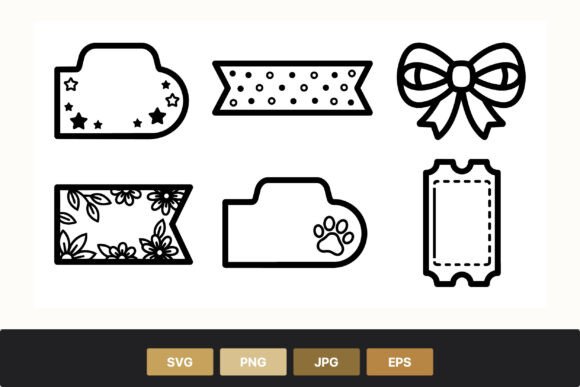
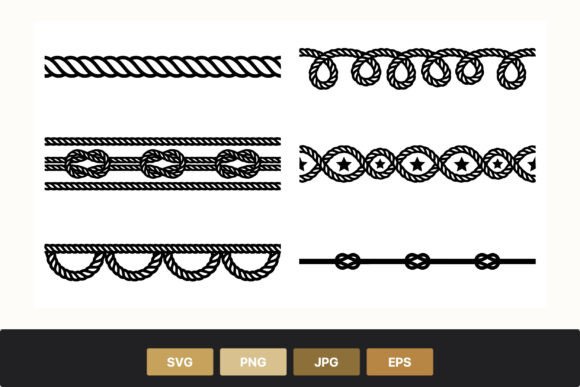
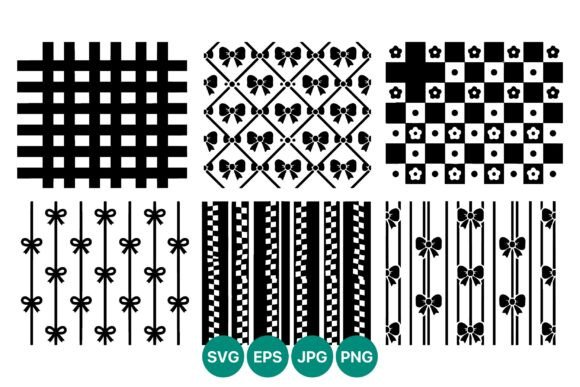
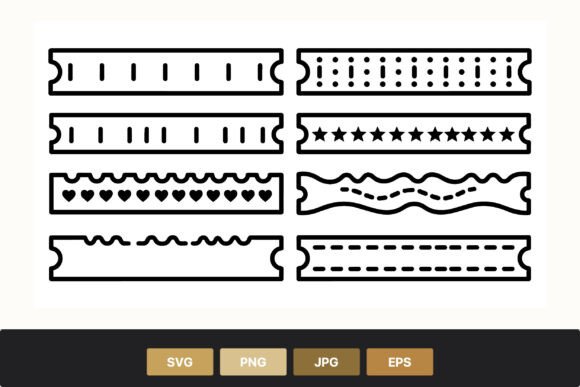
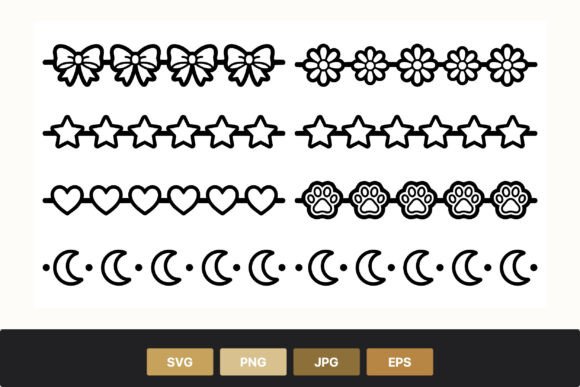
The appeal of black and white vector illustrations featuring horizontal borders lies in their versatility. Whether adorned with bows, flowers, stars, hearts, paw prints, or moons, these repeating patterns function as visual anchors. They segment information, frame key calls to action, and add a layer of polish that signals attention to detail. However, their effectiveness depends entirely on intentional application. Randomly placing decorative elements can dilute a message, whereas thoughtful integration supports long-term branding goals and enhances user experience.
The Strategic Value of Monochrome Line Art
When we discuss black and white decorative borders, we are discussing a design language that prioritizes clarity over distraction. In a strategic context, these borders act as non-verbal cues that help audiences process information more efficiently. Consider the cognitive load of a potential customer scanning a landing page or reading a printed brochure. Complex, multi-colored graphics can create visual noise, forcing the brain to work harder to identify the primary content. In contrast, clean line art in black and white offers a high-contrast boundary that defines space without adding weight.
This approach supports better decision-making in design workflows. By relying on scalable vector formats, such as SVG and EPS, designers ensure that these borders remain crisp across all mediums—from mobile screens to large-format signage. The availability of multiple file formats, including PNG for transparent backgrounds and JPG for standard compatibility, allows teams to integrate these assets seamlessly into existing templates. This flexibility reduces production time and ensures consistency, which is crucial for maintaining professional standards across diverse marketing channels.
Enhancing Brand Positioning Through Consistency
Brand positioning is often built on subtle repetitions. A specific style of border—perhaps one featuring minimalist stars or elegant floral motifs—can become a recognizable signature element. When used consistently across social media posts, email newsletters, and packaging, black and white decorative borders contribute to a unified visual identity. This consistency builds trust. Audiences subconsciously associate repeated visual patterns with reliability and professionalism.
For small business owners and freelancers, this is a cost-effective way to elevate perceived value. Instead of commissioning custom illustrations for every campaign, a well-curated library of vector borders can be repurposed indefinitely. The key is selection. Choosing borders that align with the brand’s tone—whether playful (paw prints, hearts) or sophisticated (moons, intricate florals)—ensures that the decoration supports rather than contradicts the brand voice.
Practical Applications Across Creative Workflows
The utility of these assets extends far beyond simple decoration. To maximize their impact, creators must consider the specific function each border serves within a layout. Here are several strategic applications where black and white line art drives tangible results:
- Content Segmentation: In long-form blogs or whitepapers, horizontal borders with repeating patterns can break up text blocks, making the content more digestible. This improves readability and keeps readers engaged longer.
- Highlighting Key Information: Placing a border around a testimonial, a special offer, or a critical data point draws the eye immediately. The contrast of black lines against white space creates a natural focal point.
- Digital Product Enhancement: For educators and publishers creating worksheets, planners, or journals, these borders provide a structured framework that encourages organization. Themes like moons and stars suit night-time routines or astronomy topics, while paw prints appeal to pet-related niches.
- Packaging and Label Design: On product labels, space is limited. Thin, precise vector borders can define the label area without consuming valuable real estate, allowing for clear typography and regulatory information.
Each of these use cases requires a clear understanding of the end goal. The border should never be the star of the show; it is the supporting actor that enables the main content to shine. By viewing these assets as functional tools rather than mere embellishments, creators can achieve better operational efficiency and higher-quality outputs.
Navigating File Formats for Maximum Flexibility
A critical aspect of utilizing black and white decorative borders effectively is technical proficiency with file formats. The download package typically includes SVG, PNG, EPS, and JPG files, each serving a distinct purpose in the production workflow. Understanding when to use each format prevents quality loss and ensures compatibility.
SVG (Scalable Vector Graphics) is ideal for web design and digital interfaces. Because it is code-based, it scales infinitely without pixelation and can be manipulated via CSS for interactive effects. For developers and web designers, this format ensures fast loading times and sharp rendering on retina displays.
EPS (Encapsulated PostScript) remains the industry standard for professional print applications. If you are sending designs to a commercial printer for brochures, business cards, or large banners, EPS files allow for precise color control and scaling. This format is essential for maintaining the integrity of fine line art, ensuring that delicate details like flower petals or star points do not blur or break.
PNG (Portable Network Graphics) with transparent backgrounds is invaluable for quick compositing in digital marketing materials. It allows designers to overlay borders on photos or colored backgrounds without unsightly white boxes. Meanwhile, JPG files offer universal compatibility for quick previews or internal documents where transparency is not required.
By selecting the appropriate format for each task, teams streamline their operations. This reduces the need for last-minute conversions or redesigns, allowing professionals to focus on strategy and creativity rather than troubleshooting technical issues.
Risks of Unintentional Design Choices
While versatile, black and white decorative borders carry risks if used without clear intent. The most common pitfall is visual clutter. Overusing complex patterns, such as dense floral arrangements or crowded star fields, can overwhelm the viewer and obscure the primary message. This is particularly detrimental in mobile-first designs, where screen real estate is limited.
Another risk is tonal mismatch. A playful border featuring paw prints may undermine the seriousness of a financial report or a legal document. Conversely, a stark, geometric border might feel cold and impersonal on a wedding invitation or a children’s educational resource. Context is paramount. Before integrating any decorative element, ask: Does this support the communication goal? Does it align with the audience’s expectations?
Furthermore, relying solely on decoration to fix poor layout fundamentals is a strategic error. Borders cannot compensate for weak copy, unclear calls to action, or disorganized information architecture. They are enhancers, not solutions. Effective design begins with a solid structural foundation, upon which these decorative elements are carefully layered to refine the user experience.
Planning for Long-Term Visual Assets
To derive long-term value from black and white decorative borders, incorporate them into a broader asset management strategy. Create a centralized library of approved designs, categorized by theme (e.g., nature, celestial, playful, formal). Document guidelines for their usage, specifying minimum clear space, acceptable background colors, and prohibited modifications. This governance ensures that as your team grows or as you collaborate with external freelancers, the visual integrity of your brand remains intact.
Additionally, consider the scalability of your design system. As your business expands into new markets or product lines, these borders can adapt. A moon-themed border used for a sleep aid product can be repurposed for a nighttime skincare line, maintaining brand recognition while adjusting to new contexts. This adaptability maximizes the return on investment for your design resources.
In conclusion, black and white decorative borders are more than just aesthetic additions; they are strategic tools for communication, organization, and branding. By approaching their use with intentionality, understanding the technical nuances of file formats, and aligning decorative choices with broader business goals, creators and professionals can enhance clarity, improve user experience, and build a stronger, more cohesive brand presence. The path to better design outcomes lies not in adding more, but in framing what matters with precision and purpose.