Mastering Visual Storytelling with Vintage Decorative Icons Black and White
In the rapidly evolving landscape of digital design, there is a persistent and powerful allure to aesthetics that evoke nostalgia, craftsmanship, and timeless elegance. Designers, marketers, and content creators are increasingly turning to retro-inspired elements to cut through the noise of modern minimalism. Among these resources, Vintage Decorative Icons Black and White have emerged as essential tools for establishing brand identity, enhancing user experience, and adding a layer of sophistication to digital and print media. These assets are not merely decorative; they serve as visual shorthand that communicates quality, tradition, and attention to detail.
The specific appeal of monochrome vintage iconography lies in its versatility. By stripping away color, designers are forced to rely on shape, line weight, and composition to convey meaning. This results in graphics that are inherently balanced and easy to integrate into various design systems. Whether you are designing a wedding invitation, a boutique coffee shop menu, or a heritage-brand website, understanding how to effectively utilize these icons can significantly elevate your creative output.
The Anatomy of Classic Elegance
To truly leverage the power of vintage aesthetics, one must understand the components that define this style. A comprehensive set of Vintage Decorative Icons Black and White typically includes symbols that reference historical periods of ornate design, such as the Victorian era, Art Deco, or mid-century illustration styles. These icons are characterized by intricate linework, serif influences, and symbolic imagery that resonates with cultural memories of refinement.
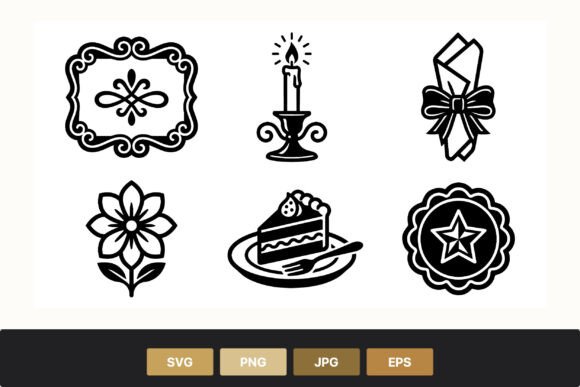
Consider the structural elements often found in high-quality vector packs. A decorative vintage frame is perhaps the most foundational element. Unlike simple rectangular borders, these frames feature scrollwork, floral motifs, or geometric patterns that draw the eye inward. They are perfect for highlighting testimonials, framing portraits, or creating distinct sections within a layout. The complexity of the frame dictates the tone; heavier, more ornate frames suggest luxury and formality, while lighter, whimsical frames imply approachability and charm.
Another critical component is the use of atmospheric objects, such as a lit candle on an ornate holder. This icon does more than represent light; it evokes warmth, intimacy, and ceremony. In a digital context, such an icon might be used to signify "evening events," "romantic dining," or "meditation and wellness." The contrast between the flame and the rigid structure of the holder creates a dynamic visual tension that is pleasing to the eye.
Culinary and Celebratory Symbolism
Food and celebration are universal languages, and vintage iconography excels at depicting these themes with grace. A slice of cake on a plate with a fork is an immediate signifier of indulgence, reward, and celebration. When rendered in a vintage black-and-white style, this image transcends mere food photography. It becomes a symbol of hospitality and artisanal quality. For bakeries, patisseries, or lifestyle bloggers, this icon serves as a subtle cue that the content involves treats, special occasions, or self-care rituals.
Complementing the culinary elements is the tied napkin. This seemingly minor detail speaks volumes about service and preparation. It suggests a table set with care, a meal prepared with intention, and an environment where guests are valued. In branding, this icon can be used to represent catering services, tableware lines, or home decor blogs focused on entertaining. The texture implied by the folds and the knot of the napkin adds depth to the two-dimensional design, showcasing the skill involved in creating effective vector art.
Natural elements remain a staple of vintage design. A stylized flower icon connects the viewer to nature, growth, and beauty. However, in a vintage context, the flower is rarely realistic. Instead, it is often stylized with symmetrical petals and bold outlines, reminiscent of botanical illustrations from the 19th century. This abstraction allows the icon to fit seamlessly into various design layouts without clashing with photographic elements.
Achievement and Recognition
Beyond atmosphere and sustenance, vintage icons also communicate status and achievement. A star medal badge is a powerful symbol of excellence, quality assurance, and award-winning status. In e-commerce, this icon can highlight best-selling products or customer favorites. In educational materials, it can mark key takeaways or completed modules. The vintage styling of the badge, often featuring ribbons and serrated edges, lends an air of official authority and timeless trustworthiness that modern, flat-design badges sometimes lack.
The combination of these six elements—frame, candle, napkin, cake, flower, and badge—creates a cohesive narrative toolkit. They allow designers to tell stories about celebration, quality, and tradition without relying on heavy text. This visual efficiency is crucial in today’s fast-paced digital environment, where users scan content quickly and make instant judgments based on visual cues.
Technical Versatility and File Formats
The utility of any design asset is determined not just by its aesthetic appeal, but by its technical flexibility. High-quality Vintage Decorative Icons Black and White are delivered in multiple formats to ensure they can be used across all platforms and production workflows. Understanding the role of each file type is essential for maximizing the value of these resources.
- SVG (Scalable Vector Graphics): This format is ideal for web design and responsive layouts. SVGs are code-based, meaning they remain crisp at any size, from a tiny favicon to a large hero banner. They are also editable via CSS, allowing developers to change colors or add animations dynamically.
- PNG (Portable Network Graphics): For users who need transparent backgrounds without the complexity of vector editing, PNGs are the standard. They are perfect for overlaying icons onto photographs, textured backgrounds, or colored sections in presentation software and social media graphics.
- EPS (Encapsulated PostScript): This is the industry standard for professional print design. EPS files ensure that the vectors remain editable in software like Adobe Illustrator, allowing designers to modify line weights, adjust nodes, or combine elements to create custom compositions for large-format printing.
- JPG (Joint Photographic Experts Group): While less flexible due to the lack of transparency, JPGs are universally compatible and lightweight. They are suitable for quick previews, email newsletters, or platforms that do not support other formats.
The download package, typically provided as a compressed ZIP file, bundles these formats together. This convenience ensures that whether you are a hobbyist creating a scrapbook or a professional designer working on a global branding campaign, you have the right tool for the job. This multi-format approach eliminates the need for conversion tools, preserving the integrity of the original artwork and saving valuable time.
Strategic Implementation in Modern Design
Integrating vintage icons into contemporary projects requires a balance between homage and innovation. The goal is not to recreate the past, but to borrow its visual language to enhance present-day communication. One effective strategy is juxtaposition. Placing a delicate, ornate vintage frame around a bold, modern sans-serif headline creates a striking contrast that captures attention. Similarly, using a star medal badge next to minimalist product photography can add a touch of heritage credibility to a modern brand.
Consistency is key. When using a set of Vintage Decorative Icons Black and White, ensure that the line weights and stylistic details are uniform across all elements. Mixing a highly detailed, engraving-style candle icon with a simple, flat-design cake icon can create visual dissonance. Stick to one cohesive set to maintain professional polish.
Furthermore, consider the psychological impact of black and white. Without color to guide emotion, the shapes themselves must carry the weight. The sharpness of the fork tines, the softness of the flower petals, and the symmetry of the badge all contribute to a sense of order and reliability. This makes these icons particularly effective for brands that want to project stability, tradition, and high standards.
Enhancing User Experience and Engagement
Beyond aesthetics, these icons play a functional role in user experience (UX) design. They break up walls of text, guide the eye through content, and provide visual anchors for information. For example, in a long-form article about event planning, using the lit candle icon to denote evening activities and the tied napkin to denote dining options helps users navigate the content more intuitively.
In educational contexts, the star medal badge can be used to gamify learning, marking milestones or achievements. The flower icon might denote sections related to nature or growth. By associating specific icons with specific types of content, creators can build a visual vocabulary that enhances comprehension and retention.
Ultimately, the value of Vintage Decorative Icons Black and White lies in their ability to bridge the gap between form and function. They are not just pretty pictures; they are strategic design elements that convey meaning, evoke emotion, and enhance usability. By selecting high-quality, multi-format assets and integrating them thoughtfully into your projects, you can create designs that are not only visually appealing but also deeply effective in communicating your message.